Community & Business
25 July, 2025
Families of Fromelles Anzacs sought
The first major battle fought by Australians on the Western Front during World War I was the battle of Fromelles on 19th July 1916 and the bodies of 70 missing soldiers are still yet to be identified.
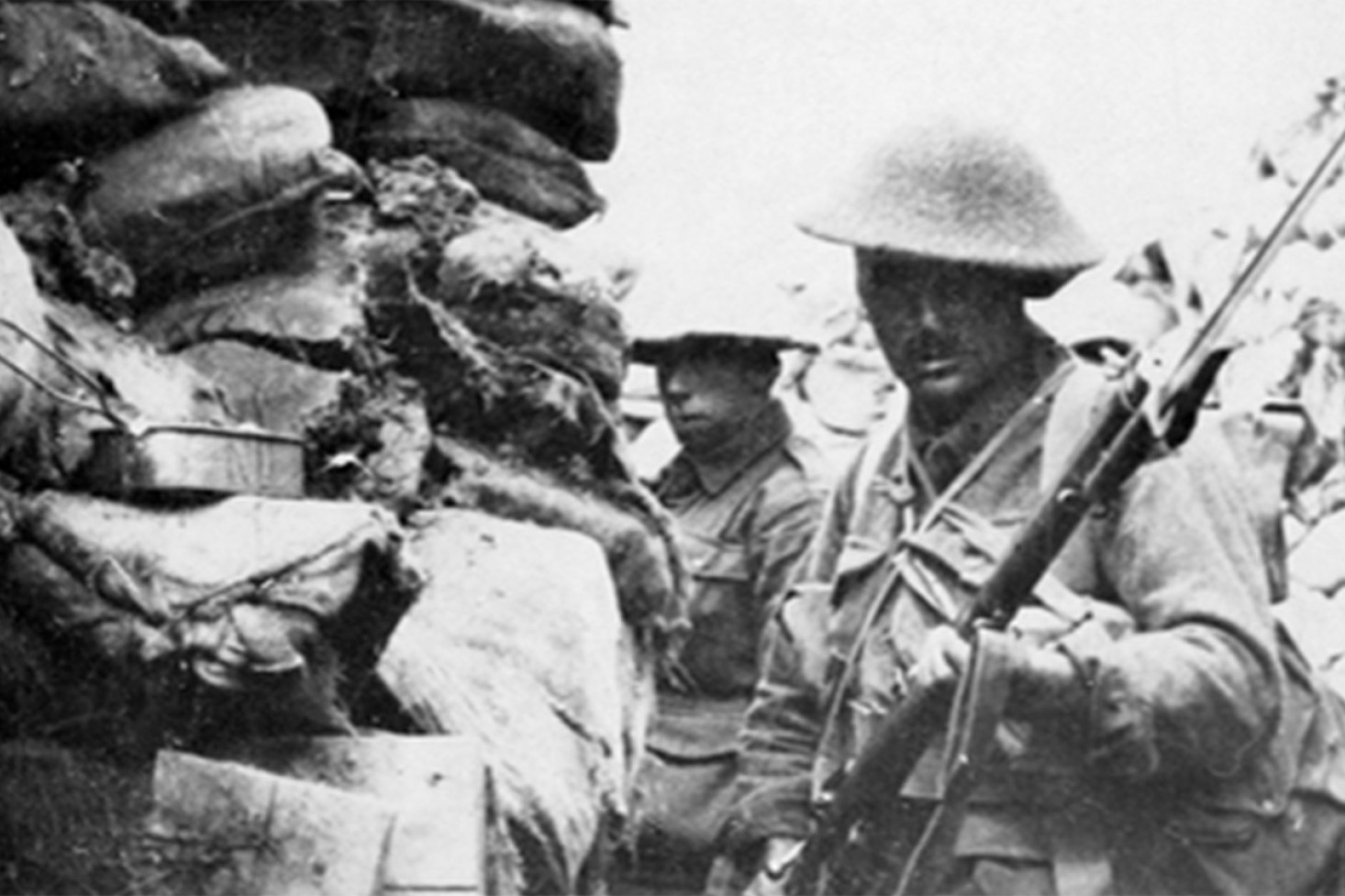
A soldier from Warwick is one of the 70 yet to be identified.
A soldier from Allora was previously identified in 2018.
Fromelles is infamous for being the single bloodiest 24 hours in Australian military history, resulting in over 5,500 casualties and is remembered for the disastrous consequences of a poorly planned diversionary attack and the tragic loss of life, with many soldiers still missing and unidentified.
The Commonwealth War Graves Commission has worked for over a century in an attempt to give every soldier killed in battle a grave in one of the many cemeteries dedicated for this purpose.
The search for soldiers bodies from World War I goes on even today as fields in France and Belgium continue to “give up” the remains of solders killed on the battlefield.
The remains of hundreds of Anzacs killed at Fromelles were unknown until 2008 when a mass grave of Australian soldiers was located by Melbourne school teacher Lambis Englezos who, along with others, dedicated years to researching and advocating for the identification and recovery of the remains of missing soldiers from the Battle of Fromelles.
His research led to the discovery of the mass burial site at Pheasant Wood near Fromelles in May 2008.
As the 109th anniversary of Australia’s first major battle on the Western Front approaches, the Fromelles Association of Australia is renewing calls for Queensland families to help identify the final 70 missing soldiers from the Battle of Fromelles.
Among them are young men from across Queensland – Warwick, Maryborough, Brisbane, Cairns, Allora and Hughenden – who served with the 31st Battalion.
They died during a single night of fighting and their names are known, but their final resting places are not.
Now, only DNA can give them back their names.
“These men were sons, brothers, farmers, clerks; everyday Australians who gave their lives in France,” Tony Ryan from the Fromelles Association of Australia said.
“We know who they are. What we don’t know is exactly where they are.
“That’s where families can help.”
Since then, 180 have been formally identified and buried with named headstones, thanks to a world-leading program of DNA analysis and forensic research.
But 70 soldiers remain unknown.
The Fromelles Association, a volunteer group working alongside the Australian Army, has helped identify many of those now named.
The Association is now urgently searching for living relatives who may be able to donate DNA and help identify the “Final 70.”
Could you be related to these men?
The Association is particularly focused on Queenslanders from the 31st Battalion who remain unaccounted for, including:
Lieutenant Ernest William Spreadborough – 42, grazier from Warwick. The oldest officer of the 31st Battalion at Fromelles. Killed while leading his men during the assault.
The Fromelles Association of Australia has amassed a substantial biography on Ernest.
He was the eldest child of John Spreadborough (18150-1918), a highly respected public servant who served for decades as the Town Clerk of Warwick, and Ann Elizabeth née Glasby (1854-1934).
He grew up with nine siblings and received his education at the Warwick Boys’ School and later trained as a teacher, working at schools across Queensland including the Central State School for Boys in Warwick.
Private Thomas Henry Tedford – 20, from Maryborough. Enlisted with his brother Billie. Killed in action on 19 July 1916; his body was never found.
Private John Charles Radford – 24, warehouseman from Brisbane. Wrote home just before the battle, describing being “in a warm corner and expecting a big attack.”
Lance Corporal George Probert Millard – 24, draper from Ipswich. Promoted to Lance Corporal shortly before going to France.
Private Stanley Byfield King (alias King Smith) – 20, from Stanley, Queensland. He enlisted under the name “King Smith” while playing in the famous Toowoomba Brass Band. Along with the bandmaster and other members, he joined the 31st Battalion to form its brass band. His body was never recovered.
Private George Olson Sutherland – 21, born in Scotland, lived in Queensland. Killed during the charge at Fromelles.
Private Arthur Donald Leigh – 23, from Landsborough. One of several Queenslanders killed in the same assault wave.
Private Walter Ernest Bain – 22, teamster born in Casino, joined from Queensland. Killed in the early stages of the attack.
Private James Joseph Curran – 29, originally from Maitland, NSW, enlisted in Queensland. No known grave.
Private Hector McDonald McLeod – 33, fencer from Aspley, Queensland. Killed on 19 July 1916 during the 31st Battalion’s attack.
A race against time
“No other group continues this level of forensic family research, we are their last chance,” Mr Ryan said.
“Living memory is gone. Now we rely on family stories, photos, service records, and DNA.”
The Association’s website fromelles.info enables the public to explore soldier stories, contribute memorabilia, and register as potential DNA donors.
“Every DNA match starts with a lead,” Mr Ryan said.
“One person, one photo, one family story, that’s all it takes.
“They died for their country.
“The least we can do is name their graves.”
Allora’s Fromelles Anzac
Private James Robert Smith was born in Allora, Queensland.
He was single and employed as a labourer when he enlisted in the Australian Army on 12 December 1915.
He was posted to 32 Battalion, 9th Reinforcements.
On 31 January 1916, Private Smith, aged 22 at the time, embarked from Brisbane, Queensland, on board HMAT A62 Wandilla.
Private Smith served in Egypt and the Western Front before he was killed in action at Fleurbaix, France, on 20 July 1916.
Private Smith was one of 250 Australian and British World War One soldiers recovered from a mass burial site at Pheasant Wood in France in 2009 and reburied in the Fromelles Military Cemetery in 2010.
Private Smith was identified in 2018.