Community & Business
28 October, 2025
Living in Steele Rudd Country: the Lipps of Emu Creek
Emu Creek was often referred to in the past as “German Ridge” due to the large number of German migrants who took up land in the district. One of the most prominent of the German families, the Lipps, first came to Australia in 1871 when family patriarch George Lipp took up a selection.
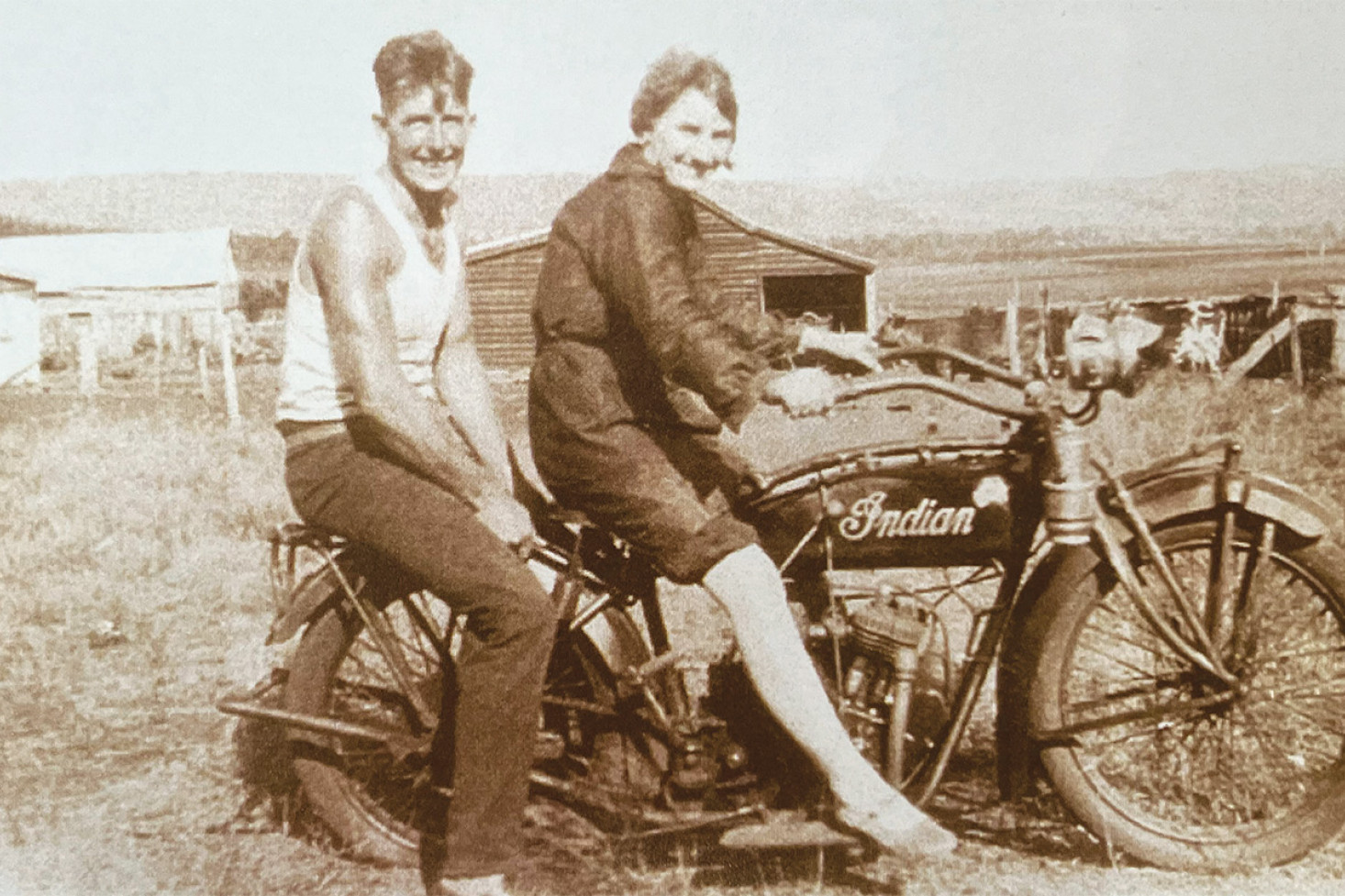
However, mystery surrounds the early days of George as factual information is strangely missing and even his marriage promotes more questions than answers but he did eventually establish the Lipp family solidly in Emu Creek.
The Mystery of George Lipp
Why did young men leave their homeland for life in a pioneer land?
Was it to escape problems at home or was it the magnetic attraction of an adventurous life on a far off land?
We don’t have any information on when and how George Lipp came to Australia and it is one strange mystery.
Family historian, Noel Lipp has made a valiant effort to uncover this information but much of George Lipp’s early days in Australia remains, at best, vague.
Noel has been unable to determine even on what ship George made his passage to Australia.
Making the search for this information even more frustrating is the fact that the ship “Alfred”, arriving in Australia in 1862, has the name “George Lipp” on a list of passengers.
Unfortunately experts engaged by Noel have vehemently stated that the listing is incorrect and a passenger, George Liebler, was mistakenly written down as George Lipp, as were two other passengers.
Noel has come to the conclusion that it’s very likely George did arrive in Australia in 1862 but his name was not recorded.
What is known is that “mysterious” George purchased a quarter acre block of land in “Little Ipswich” in 1864.
Here he met Heinrich Gerstenkorn and his wife, Margaretha, both migrants from Germany.
Both George and the Gerstenkorn family left Ipswich for the Warwick district, seemingly around the same time, and obviously were known to each other.
No great mystery in that you might say.
But the mystery deepens when George marries Mrs Margaretha Gerstenkorn in 1868 as it seems Heinrich was accidently shot in 1867 when a gun he was unloading from a buggy discharged, killing him.
The mystery surrounding George and this marriage deepens when after only five weeks of “marital bliss” he places a Notice in the Warwick Examiner and Times on 13th June 1868 stating that his wife, Margaret Lipp, has left him and advising that he will not be responsible for any debts which she may contract.
How could mystery surrounding George become any more intriguing?
Fortunately for George the next phase of this life begins to follow a normal pattern.
Around 1870 George decides to acquire land and applies to the government to take up an 80 acre selection, “Hillside”, next to neighbour Tom Davis at Emu Creek.
In order to be given the deeds to the block George needed to fulfil certain tasks such as clearing and cultivating at least half the block and fencing a portion of the land.
He also had to live on the selected land and so he set about building a slab hut.
By 1878 it seems George had become a successful farmer as a reporter of the Darling Downs Gazette writes;
“Here there are 24 acres under corn (looking good), 2 acres under lucerne and 20 acres lying fallow. There is a good house and other improvements and a new barn and stable are being erected. “
The house referred to was a weatherboard and shingle home that had replaced the slab hut.
After a mysterious start to his life in Australia George Lipp appears to have found stability and comfort in his life at Emu Creek as he successfully worked his land.
He did not marry again and had no children.
George died on 17th January 1906 and was buried the same day in the Greenmount Cemetery.
Johannes & Mary Lipp
Johannes, is the younger brother of the mysterious George Lipp and he came out to Australia with his wife, Mary, arriving on board the migrant ship “Humboldt” in 1870 after a voyage of 111 days.
George had paid for their voyage suggesting the brothers were very close.
Johannes and Mary took up a selection of 80 acres adjacent to the Warwick- Toowoomba Highway, near the Emu Creek State School and close to George’s selection.
As a farmer, Johannes must have been successful in that he stayed on his selection until his death in 1917 and is buried in the Greenmount Cemetery.
Mary survived her husband by 16 years and remained on their farm assisted by her two sons.
She is buried alongside her husband.
While “successful” the first generation of Lipps at Emu Creek was by no means well off.
Historian D. B. Waterson’s chronicles the selection saga of the Downs area as “Some selectors, particularly the Germans, managed to survive and even thrive on a subsistence level, but most farmers were not prepared to accept such hardships for any length of time. They had not emigrated for this.”
Johannes and Mary stayed the journey on their farm and paved the way for the next generation of Lipps.
Dave & Hilda Lipp
When George Lipp died in 1906 he left his selection of land to his nephew, Frederick David Lipp (Dave).
Only four months later, Dave, aged 22, married Hilda Marie Nicolaus, eighteen years old, in
St. Luke’s Church of England, Toowoomba.
The original block of 80 acres selected by George was directly opposite the 160 acres taken up by Thomas Davis, the father of Arthur Hoey Davis (Steele Rudd) (born 1868).
When Dave Lipp took ownership of George’s block, Steele Rudd had moved away, but one can only wonder how much of Rudd’s experiences living opposite George and Johannes Lipp were woven into his famous publication ”On Our Selection”.
Family historian, Noel Lipp, has said how proud he is when thinking that Arthur Hoey Davis and he spent their formative years on the same bit of land, being where the Steele Rudd Park is today.
Dave and Hilda had five children, three girls and two boys, and when they grew up they married into many of the district’s farming families.
First born was Thelma Ruby Lipp born 1908 and died 1990, she married Roger MacGinley.
A son was born next, Stan Robert Lipp born 1910 and died 1994 and he married Frances Wilson.
Two years later in 1912 Madge Lipp came along.
She married Bert Pearse and died in 1997.
Another daughter, Dulcie May Lipp came along in 1915 (1984) and married Albert Deutscher.
The last of their children, a boy, David Reginald Lipp was born in 1917 (1991) and he married Irene Hallam.
Over the course of nine years they had five children and it is interesting to note their children’s average life span was 79 years.
It seems hard farm work never hurt anyone.
In Noel Lipp’s 2008 family history book, Living In Steele Rudd Country he records that Dave and Hilda had thirty-one grandchildren.
A great insight into pioneer life on the Emu Creek selection comes from eldest daughter Thelma’s recollection of events in 1914.
Six year old Thelma was loaded into the horse drawn sulky with her mum, Hilda, brother Stan and sister Madge for a short trip to the home of Mrs Campbell at Budgee.
Disaster struck only a hundred yards from Hillside when the sulky overturned after hitting a stump.
The three kids were thrown clear but Hilda, pregnant with their fourth child, was badly injured and spent several months in Toowoomba General Hospital only to return home and shortly after, Dulcie was born.
Whilst Hilda spent her time in hospital, Dave looked after the kids at the same time the harvest was in full swing.
Ever resourceful Dave put Thelma on an old draught horse and loaded Madge and Stan onto his own horse and off into the paddocks they would go.
The kids had to be taken care of and the harvest work had to be done.
And so it was. Over time the Lipp farms were successful and generation after generation followed.
Emu Creek State School had a continuous flow of Lipp children for over 100 years.
One constant for the various branches of the family was the ‘Hillside’ homestead built on the original selection of the mysterious George Lipp.
Noel Lipp recalls how it became a meeting place for all the cousins on weekends and how the kids just bunked down anywhere they could for the weekend “sleep over”.
Finally after nearly 120 years the difficult decision was made to sell the property and in 1988 new owners took over and the Lipp era at Emu Creek came to an end.
For many years Noel often found himself driving down Rex Lipp Road just to have another glimpse of the home that conjures up wonderful memories for him.
Memories of family life and memories of living in Steele Rudd country.
Every family needs a family historian like Noel Lipp whose three family history publications have been instrumental in writing this article:
Searching for George Lipp 2017.
From Ostheim to Emu Creek. 2007
Living in Steele Rudd Country 2008
The Courier would also like to thank the Clifton Historical Society for the use of Noel’s publications.
Next week we follow the history of an English family who arrived in Australia in 1866 having survived being ship-wrecked on the way out.