Community & Business
2 December, 2025
Sailing Vessel “Golden Empire” brings the Gillams to Queensland
Clifton’s Gillam family tree begins with Charles Gillam and his wife Elizabeth Ann Young when they arrived in Brisbane in 1863 aboard the migrant ship Golden Empire.
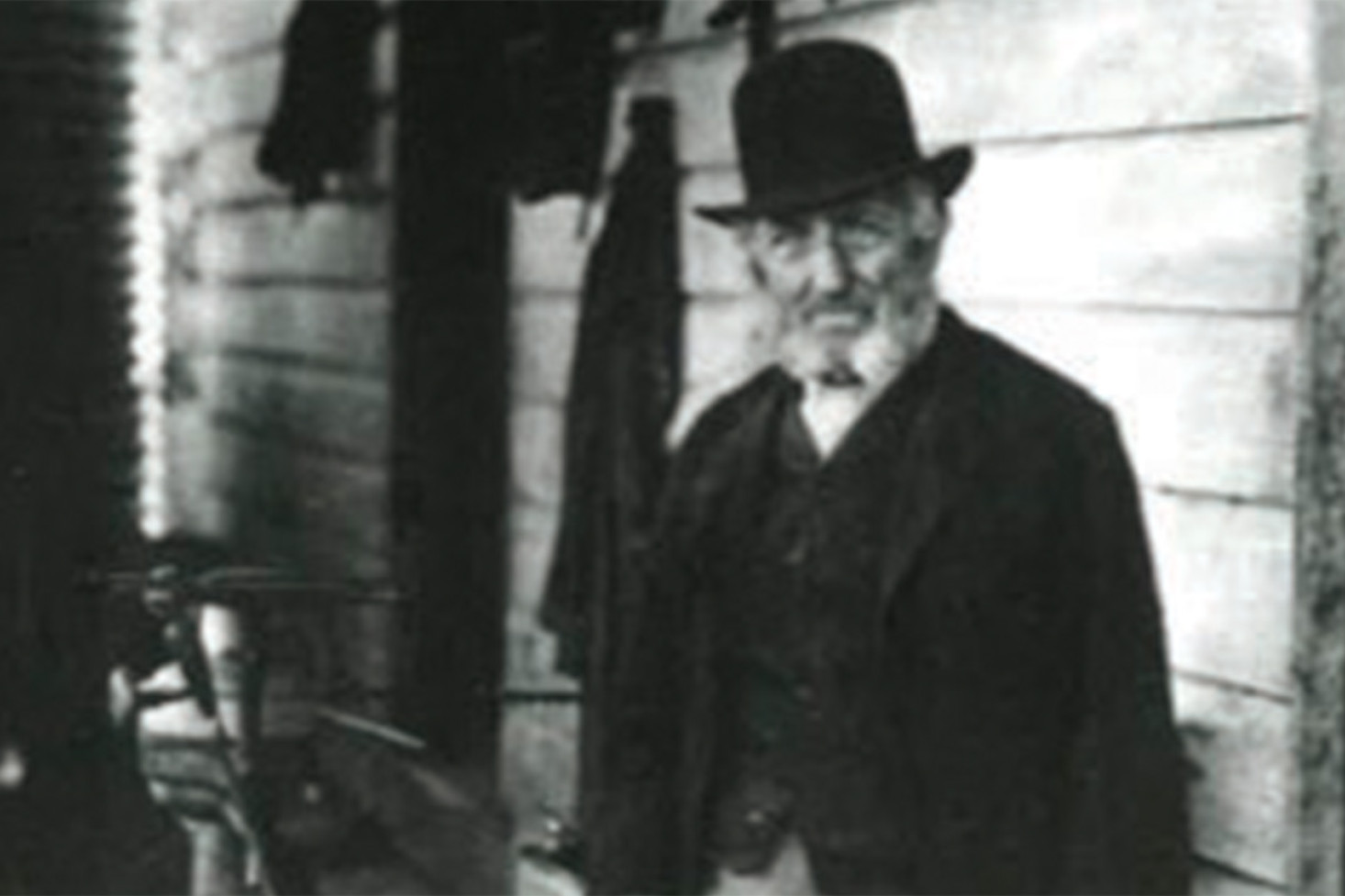
Little is known of what drove them to travel to a land they barely knew although their life in England seemed unsettled as they regularly moved from town to town.
Charles was not a young man when he decided to emigrate, being 46 years of age, while Elizabeth was 47.
They already had six sons and three daughters all of whom made the trip out on the Golden Empire.
Their eldest son, William Gorden was 22 years of age but already showing entrepreneurial skill beyond his young age because he wasn’t coming to Australia empty handed.
A Mr David Bugden of Warwick in Queensland had written to relatives in England explaining that the Warwick district did not have an indigenous reliable green fodder plant for winter feed.
On hearing this William seized the opportunity and bought a 28lb bag of lucerne seed before boarding the Golden Empire.
The seed cost £6 and, as his total life savings amounted to only £7, this was quite a gamble.
During the voyage to Queensland he used the bag of seed as a pillow but the lucerne arrived safely.
The Gillam boys made the journey to Warwick on a bullock team carrying their life possessions and the bag of seed that held their future.
The journey took five weeks over almost impassable roads but there was a steely determination within the family.
Charles Gillam quickly set about leasing some land, “Ardendeuchar” (where the TAFE College is today), and grew three acres of lucerne using William’s lucerne seeds.
As they had hoped they were then able to sell the seed at a very nice profit.
The rest, as they say, is “history” as the Warwick and the Darling Downs districts have become immense lucerne growing areas right to the present day.
In 1866 Charles Gillam and his sons nominated for selections from the release of land from the Clifton Agricultural Reserve.
Charles purchased several portions at Spring Creek including one where he built the ‘Clifton Arms Hotel’.
At this establishment Charles set up a mail depot and it became the stopping place for Cobb & Co. Coaches.
The Gillams grew petunias around the house and along the front fence as the hotel became central to social interaction.
The supply of wine and rum for the hotel was brought from Ipswich by teamsters.
The station hands from Headington Hill came on Saturday nights and when they had too much to drink they would sleep off the effects in a barn belonging to Patrick Dalton, a local farmer.
Charles Gillam’s hotel provided a meeting place for the district as farmers met for political discussions and organising a school for the area.
When the railway went through King’s Creek and Clifton in 1869 there was less need for the services of the hotel and the license was transferred to Mr James Mowen at Clifton along with the name ‘Clifton Arms’.
The Gillams continued to run the mail from Clifton to Spring Creek P.O. for 80 years
In 1870 Charles, Elizabeth, daughter Elizabeth Anne and son, Charles Young returned to England and were away for two years.
After their return Mr Davenport of Headington Hill donated an acre of land for the building of a Church of England and Charles and Henry Saal set about collecting money for the building of St. Matthew’s Church at Spring Creek.
Charles held the position of Church Warden until 1896.
Charles became involved in farming activities in the region and in 1879 he had 31 acres under wheat, yielding an excellent crop of 127 bags.
He was a founding member of the Allora Show Society, a clear sign of how he and his wife Elizabeth had become highly involved in the community in farming and church matters.
Elizabeth passed away at their Spring Creek residence on September 3, 1886 after a long illness with her family by her side.
Charles died at his Spring Creek residence two days before his 82nd birthday in 1899.
He had been a resident of the district for 33 years and his funeral attracted one of the largest corteges ever seen as it moved to the Allora Cemetery where he was buried beside his wife Elizabeth.
Charles and Elizabeth left a family of seven children, forty-five grandchildren, and seven great grand-children - one son Andrew had predeceased them.
Their eldest son, William Gorden led an unusually varied life where his entrepreneurial spirit often got him into financial difficulties.
It seems his success at twenty-two years of age turning his bag of lucerne seed into a nice profit encouraged him to take on risky financial projects throughout his life.
At various times he was a carpenter, wheelwright, hotelkeeper, church builder, cordial and soap maker, insurance agent, auctioneer, hairdresser, tobacconist, ironmonger, but possibly he will be most remembered for the beautiful churches he built on the Downs.
St. David’s Church of England in Allora is testament to his skills and where many of his family would eventually pass on their way to their final resting place at Allora Cemetery.
Other churches he built include the Killarney Church of England and the first All Saints’ Church of England in Clifton.
William had a very successful marriage in 1865 to Sarah Hawkins, only two months after she arrived from England on board the Royal Dane.
This voyage proved to be a risky one as 33 of the 545 passengers on board died, mainly from measles.
At the time of their marriage William was employed on Rosenthal Station as a wheelwright but soon moved to begin building ‘The Gap Hotel’ at Cherry Gully.
He received his country publican’s licence in 1872 and started a new phase of his life.
The hotel was a staging post for Cobb & Co Coaches on the Warwick - Stanthorpe road and it seems William was revered by the teamsters for his honest dealings.
However, in a repeat of what happened to his father with the ‘Clifton Arms Hotel’ at Spring Creek, the coming of the railway soon meant the hotel was losing money.
William had debts that he now found difficult to repay.
It was not until 1884 that William finally received a Certificate of Discharge from his insolvency.
Undeterred, he soon opened a cordial factory in Allora in 1890 and this soon extended into a soap making business and later he opened a tobacco shop in Grafton Street, Warwick.
By 1895 the cordial and soap making business was up for sale but William was always ready for something new and in 1902 he went into partnership with Mr T. Kennedy in a hairdressing and tobacconist business in Palmerin Street, Warwick.
In October 1915 the ever increasing Gillam family gathered in Clark Street Clifton to celebrate William and Sarah’s Golden Wedding anniversary.
Tragically, of the five children William and Sarah produced, only two reached adulthood.
Sarah died in 1917 aged 80, while William died nine years later and they are buried together in the Allora Cemetery.
During their lifetime they witnessed the height of the Industrial Revolution in England and the growth of the British Empire while in Australia they saw the end of the convict era, the Bushranger period and the gold rushes.
They saw the growth of Australia’s wool industry and the Federation of the states to form a nation.
They witnessed the end of “Squattocracy”, the tragedy of the Anzacs at Gallipoli and hard fought victory on the Western Front.
Charles Gillam and his sons brought a bag of seed to Queensland that started a lucerne industry but more importantly they began the Gillam family dynasty.
The Courier would like to thank Ashley & Helen Gillam and the Clifton Historical Society for resources used in this article.
Next week we will feature another of our pioneer families.