Agricultural
15 July, 2025
Weed control for plants out of place
For farmers and agronomists, a large portion of money, time and research is spent on the improvement of weed control in fallow paddocks and to fight herbicide resistance.
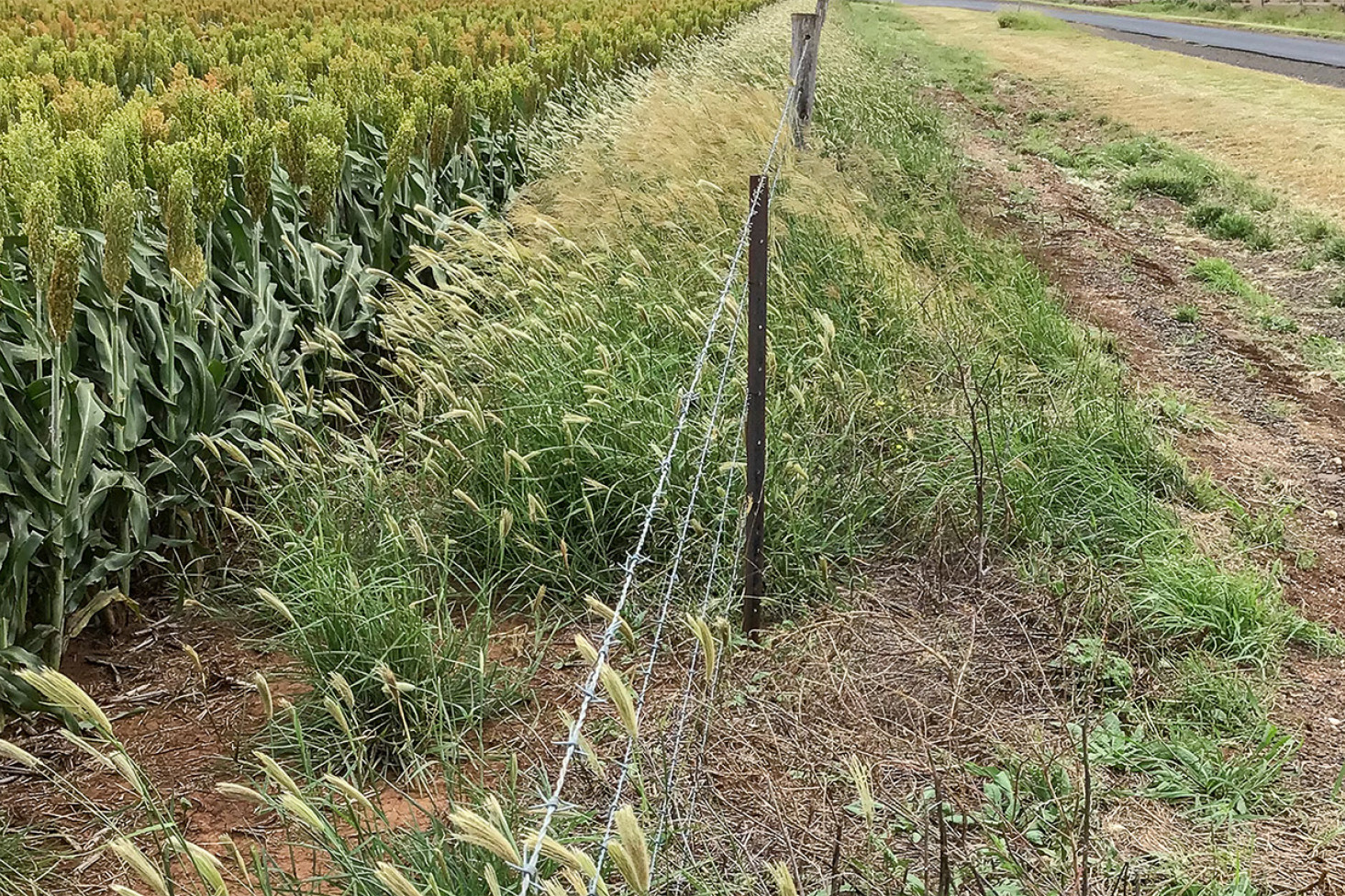
Industry Development Agronomist - Northern Region with Pulse Australia/WeedSmart, Paul McIntosh said weed control is crucial even on boundary lines and fences.
“When I drive down roads and farm tracks , I see plenty of these weedy fence line situations,” he said.
“Those without fences are somewhat luckier to have a few extra tactics or solutions for not having very pesky weeds growing, and seeding prolifically along their paddock or boundary areas.
“However, it is more than just fence lines isn’t it? Little used farm tracks, machinery graveyard areas or even grain storage parts can all have these plethora of plants we call weeds, growing and seeding.
“Of course what is worse is the level of herbicide resistance we may have in these weeds.
“Sure, these side areas of weeds are not going to cause yield or quality loss this year perhaps, yet having a large reservoir of weed seeds that can travel by any numbers of means around your property and neighbours places is not so good,” Mr McIntosh said.
He made note that even pollen transferring from outcross behavioural weeds like Feather Top Rhodes can move with the wind.
“Does that mean you will never be free of these dratted plants out of place?,” he said.
“Some years ago, I was involved with a pilot program of area wide management of weeds.
“The group looked and surveyed three regions in eastern Australia including Riverina, Darling Downs and the Sunraysia based around Mildura,” Mr McIntosh said.
The weeds assessed for herbicide resistance levels were Fleabane in the Riverina and Sunraysia regions, and Feather Top Rhodes on the Darling Downs.
“Riverina had Glyphosate resistance levels of 50 per cent in paddock tests and in roadside populations of Fleabane there was 44 per cent resistance.
“Sunraysia had Fleabane on the roadsides at 45 per cent and slightly higher in their paddocks, whilst on the Darling Downs with our very own Feather Top Rhodes grass plants, were a massive 83 per cent resistant in the paddocks and 59 per cent on roadsides for Glyphosate.
“We all see plenty of surveys on this weed resistance subject and sometimes it just doesn’t trigger a reaction for cleaning up these sideline plants.
“Of course when herbicide resistant weeds are in a cultivation block, there can always be a strategic or wholesale cultivation action to give you a reset for your weed control success.”
In the areas that cannot be cultivated, Mr McIntosh suggested roadside slashing for reducing or stopping weed seed set and growth.
“Of course not all local authorities allow this sort of mechanical action on their table drains, so best check this issue first.
“Whilst I am first to know that everyone on the farm is busy, some contemplation of these above stats may lead you to reconsider your old fence lines or farm track areas for stopping seed set in these plants we call weeds,” Mr McIntosh said.
The WeedSmart Big 6 for chemical, mechanical and cultural tactics to help control weeds and fight herbicide resistance include:
Rotate crops and pastures
Increase crop competition
Mix and rotate herbicides
Optimise spray efficacy
Stop weed seed set
Implement harvest weed seed control.